GH4169 Superalloy Material is a precipitation-hardened nickel-based high-temperature Special Steel Material composed of body-centered tetragonal y" and face-centered cubic y' phases. It exhibits excellent comprehensive properties within the temperature range of -253°C to 700°C. At temperatures below 650°C, its yield strength ranks first among deformed high-temperature alloys. It also possesses excellent fatigue resistance, radiation resistance, oxidation resistance, corrosion resistance, machinability, weldability, and long-term microstructural stability, enabling the manufacture of various complex-shaped components. It has found extremely widespread application in the aerospace, nuclear energy, and petroleum industries within the aforementioned temperature range. Another characteristic of this alloy is that its microstructure is highly sensitive to thermal processing techniques. Understanding the rules governing phase precipitation and dissolution within the steel alloy, as well as the interrelationships between microstructure, processing techniques, and performance, enables the development of reasonable and feasible process procedures tailored to different usage requirements, thereby producing components that meet various strength levels and application demands. The available product range includes forgings, forged bars, rolled bars, cold-rolled bars, discs, rings, plates, strips, wires, tubes, etc. These can be fabricated into components such as discs, rings, blades, shafts, fasteners, elastic elements, plate structural components, and engine casings for long-term use in aerospace applications.
GH4169 Grade Specifications and Supply Status
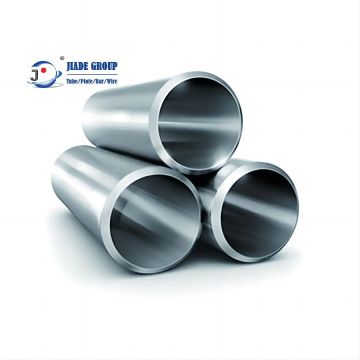
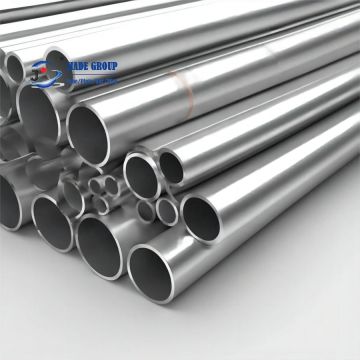
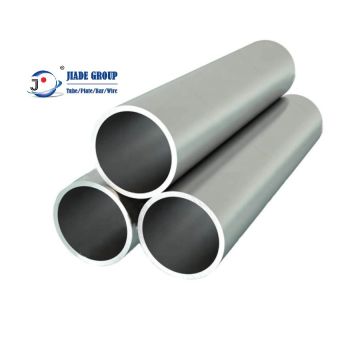
We can supply die forgings (discs, solid forgings), discs, rings, bars (forged bars, rolled bars, cold-drawn bars), plates, wires, strips, tubes, fasteners of various shapes and sizes, elastic elements, etc. The delivery condition is determined by mutual agreement between the supplier and the buyer. Wire materials are delivered in coils according to the agreed delivery condition. GH4169 Melting and Casting Processes
The alloy's melting process is divided into three categories: vacuum induction melting with electric arc remelting; vacuum induction melting with vacuum arc remelting; and vacuum induction melting with electric arc remelting followed by vacuum arc remelting. The appropriate melting process can be selected based on the part's application requirements to meet the application needs. GH4169 Application Overview and Special Requirements
Manufacturing various stationary and rotating components in aviation and aerospace engines, such as discs, rings, casings, shafts, blades, fasteners, elastic elements, gas ducts, sealing elements, and welded structural components; manufacturing various elastic elements and grids for nuclear power industry applications; manufacturing parts and other components for the petroleum and chemical industries. In recent years, based on the continuous deepening of research on this alloy and the expanding scope of its applications, numerous new processes have been developed to enhance quality and reduce costs: vacuum arc remelting employs helium cooling technology to effectively mitigate niobium segregation; injection molding processes are used to produce rings, thereby lowering production costs and shortening production cycles; and superplastic forming processes are employed to expand the range of products that can be manufactured.
GH4169 Heat Treatment
The GH4169 alloy undergoes different heat treatment regimes to control grain size, phase morphology, distribution, and quantity, thereby achieving different levels of mechanical properties. The alloy's heat treatment regimes are divided into three categories:
1. (1010–1065)°C + 10°C, 1 hour, oil cooling, air cooling, or water cooling + 720°C + 5°C, 8 hours, furnace cooling at 50°C/hour to 620°C + 5°C, 8 hours, air cooling Materials treated under this regimen exhibit coarse grain structure, with no phase 6 present at grain boundaries or within grains, and exhibit notch sensitivity, but it is beneficial for improving impact performance and resistance to low-temperature hydrogen embrittlement. 2. (950–980)°C + 10°C, 1 hour, oil cooling, air cooling, or water cooling + 720°C + 5°C, 8 hours, furnace cooling at 50°C/hour to 620°C + 5°C, 8 hours, air cooling. Materials treated under this regimen have 8 phases, which helps eliminate notch sensitivity, and is the most commonly used heat treatment regimen, also known as the standard heat treatment regimen. 3. 720°C + 5°C, 8 hours, furnace cooling at 50°C/h to 620°C + 5°C, 8 hours, air cooling. After treatment under this regimen, the material contains fewer 6 phases, improving its strength and impact performance. This regimen is also known as the direct aging heat treatment regimen.
GH4169 Grade Specifications and Supply Conditions
The following products are available: forged components (discs, solid forgings), discs, rings, bars (forged bars, rolled bars, cold-drawn bars), plates, wires, strips, tubes, fasteners of various shapes and sizes, elastic components, etc. The delivery condition is determined by mutual agreement between the supplier and the buyer. Wire is supplied in coils in the agreed delivery condition. GH4169 Melting and Casting Processes
The alloy's melting processes are divided into three categories: vacuum induction melting with electric arc remelting; vacuum induction melting with vacuum arc remelting; and vacuum induction melting with electric arc remelting followed by vacuum arc remelting. The appropriate melting process can be selected based on the part's application requirements to meet the application needs.
GH4169 Application Overview and Special Requirements
Manufacturing various stationary and rotating components in aviation and aerospace engines, such as discs, rings, casings, shafts, blades, fasteners, elastic elements, gas ducts, sealing elements, and welded structural components; manufacturing various elastic elements and grids for nuclear power industry applications; manufacturing parts and other components for the petroleum and chemical industries. In recent years, based on the continuous deepening of research on this alloy and the expanding scope of its applications, numerous new processes have been developed to enhance quality and reduce costs: vacuum arc remelting employs helium cooling technology to effectively mitigate niobium segregation; injection molding technology is used to produce rings, reducing production costs and shortening production cycles; superplastic forming technology is employed to expand the range of products.
Application Fields
Due to its high-temperature strength, excellent corrosion resistance, and ease of processing at 700°C, it can be widely applied in various high-demand scenarios:
1. Turbines
2. Liquid-fuel rockets
3. Cryogenic engineering
4. Acidic environments
5. Nuclear engineering


 Contact Now