Key Advantages
1. Excellent welding performance, low crack susceptibility, and high stability
Formulated exclusively for 6060 aluminum alloy welding wire, this product exhibits extremely low sensitivity to hot cracking and excellent melt pool fluidity. The welding process produces no spatter, no porosity, and no inclusions. Suitable for high speed welding operations, it delivers full, smooth weld beads with a fine grain structure, effectively addressing the issues of cracking and rough surface finish commonly associated with standard aluminum welding wires. It is well-suited for large-scale industrial welding production.
2. Strong Anodizing Compatibility and High Aesthetic Consistency
With a precise silicon-magnesium ratio, the post-welding properties of the weld bead are highly consistent with those of the 6060 base material. After anodizing, the color, gloss, and film thickness perfectly match the base material, leaving no visible weld marks. This fully meets the welding process requirements for high-end decorative aluminum profiles and exterior components, eliminating issues such as color discrepancies and mottling.
3. Corrosion and Wear Resistance, Long Service Life
Inheriting the excellent corrosion resistance of the 6060 alloy, the welds exhibit strong resistance to atmospheric corrosion and oxidation, making them suitable for outdoor, open air, humid, and mildly corrosive environments. The post weld structure is highly stable, resistant to deformation and peeling, and maintains a high level of structural integrity with the base material, ensuring long-lasting durability.
4. Wide Processing Compatibility and Strong Process Compatibility
Combining good ductility with machinability, the welded joints can undergo secondary processing—such as cutting, grinding, polishing, and bending—immediately after welding. Compatible with mainstream TIG and MIG welding equipment, it requires no special adjustments, is easy to use, and offers high production efficiency, making it suitable for welding various precision and complex aluminum components.
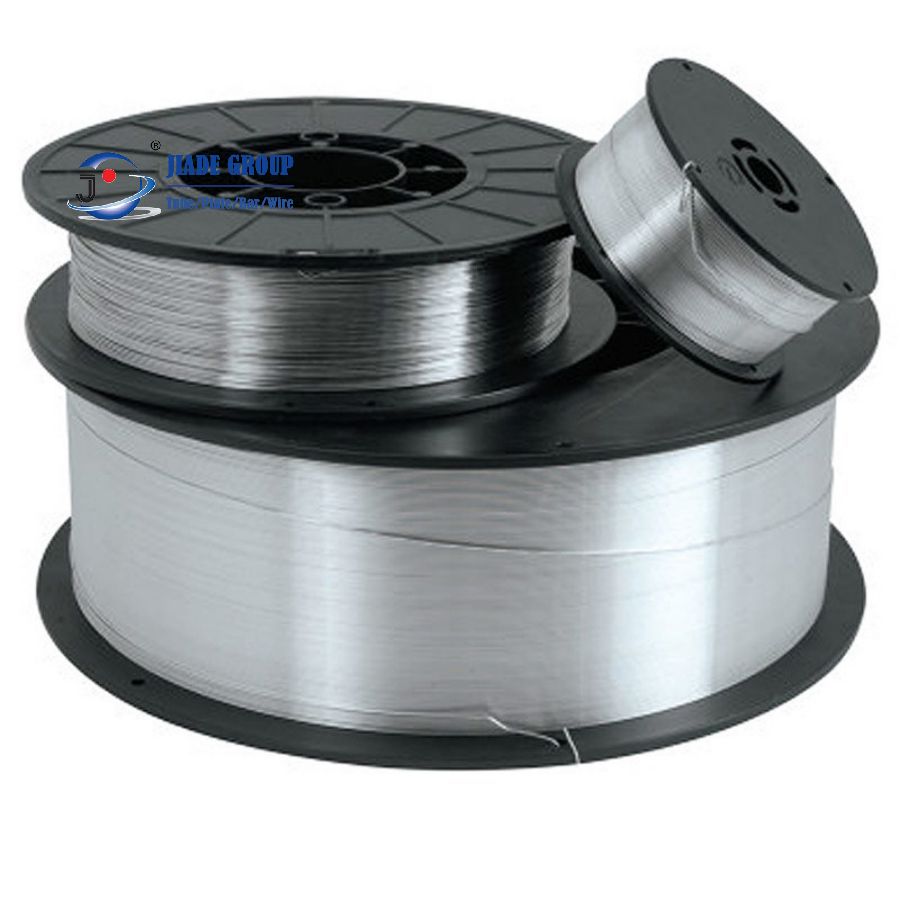
Manufactured through extrusion and wire drawing from high-purity aluminum ingots, the production process is fully dust-free. The welding wire surface is smooth, free of oxidation, oil residue, and burrs, ensuring smooth feeding without jamming. Each batch features uniform composition and stable performance with minimal variation between batches, meeting the demands of both precision welding and standardized mass production.
Application
This product is specifically designed for 6060 aluminum profiles and 6000 series aluminum alloys. It is widely used in the welding of aluminum alloy structures across multiple industries. Key applications include:
Architectural and decorative industry: Welding of aluminum alloy doors and windows, curtain wall frames, guardrails, partition profiles, and decorative moldings
Industrial equipment industry: Welding of equipment racks, assembly line frames, conveyor components, instrument housings, and aluminum heat sinks
New Energy Industry: Welding of solar PV mounting brackets, aluminum frames for energy storage equipment, and lightweight new energy components
Automotive and Transportation Industry: Welding of lightweight automotive components, body trim parts, and small aluminum structural components for rail transit
Consumer Home Goods Industry: Welding of exterior and structural components for aluminum alloy furniture, fitness equipment, and aluminum kitchen and bathroom fixtures
FAQ
Q1: What types of aluminum material is 6060 aluminum alloy welding wire suitable for? Can it be used to weld 6063?
A: This product is primarily designed for 6060 aluminum alloy base materials, but it is also fully compatible with the entire 6000 series of aluminum-magnesium-silicon alloy profiles, including 6063 and 6061. It is the preferred general-purpose welding wire for architectural aluminum profiles and industrial frame welding, offering strong welding compatibility and consistent weld bead formation.
Q2: What causes color differences or blackening during anodizing after welding?
A: This is most likely caused by inadequate pre-weld cleaning, insufficient gas purity, or excessive heat input during welding. Thoroughly cleaning the oxide layer, using high-purity argon gas, and adhering to standard welding parameters will ensure that the weld bead matches the base material’s color after anodizing, with no noticeable color differences.
Q3: What should be done if the wire frequently jams or feeds unevenly during welding?
A: The surface of this welding wire is smooth and free of burrs. Wire jamming is typically caused by mismatched feed roller settings, clogged feed tubes, or moisture-induced deformation of the wire. This can be resolved by inspecting and adjusting the wire feeding equipment, cleaning the feed tubes, and replacing the feed rollers with appropriately sized ones.
Q4: How can I prevent porosity and cracks in the weld after welding?
A: Porosity is primarily caused by oil contamination, moisture, or impure gas; cracks are often caused by excessive heat input or too slow a welding speed. Thorough pre-weld cleaning, proper gas parameters, and fast welding with low current can completely prevent these issues.
Q5: Do you support custom specifications and bulk contract manufacturing and packaging?
A: Yes! We offer customization for special diameters, custom spool weights, and industrial grade packaging. We support bulk private labeling for major manufacturers and customized shipping reports, and can provide a full set of quality inspection documentation to meet engineering, international trade, and major manufacturer procurement standards.


 Contact Now