
Implants and Surgical Devices: Used in orthopedic pins, screws, and cranial plates due to biocompatibility.
Dental Uses: Orthodontic wires, dental implants, and crowns.
Medical Devices: Components in pacemakers and surgical instruments, MRI-compatible equipment.
Aerospace and Defense
Aircraft Components: Structural wiring, engine parts, and fasteners in aircraft and spacecraft.
Military Uses: Armor, missile systems, and sensors requiring durability and lightweight materials.
Industrial and Marine Applications
Chemical Processing: Equipment for corrosive environments, such as heat exchangers and reactors.
Marine Engineering: Submarine cables, ship components resistant to saltwater corrosion.
Cathodic Protection: Titanium anodes for pipelines and ships to prevent corrosion.
Consumer Goods
Sports Equipment: Bicycle spokes, golf clubs, and camping gear.
Jewelry and Eyewear: Hypoallergenic rings, bracelets, and lightweight eyeglass frames.
Art and Craft
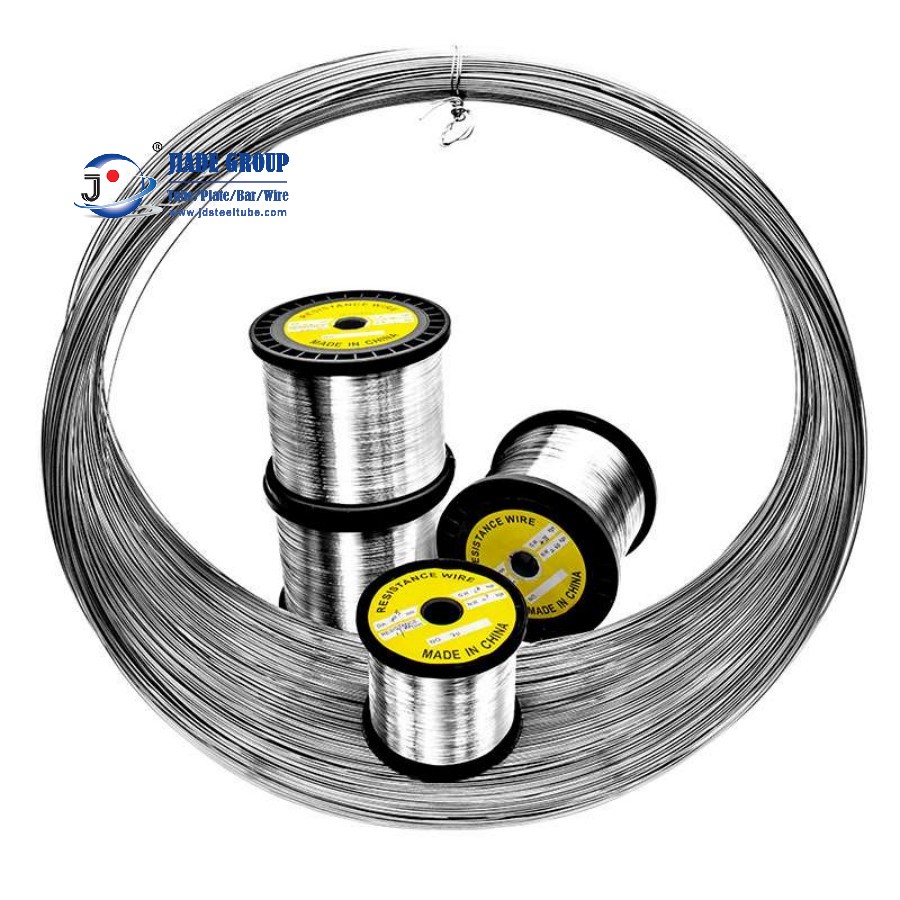
Decorative Uses: Anodized wires for colorful jewelry, sculptures, and craftwork.
Electrochemical Applications
Electrodes: Used in electrolysis, chlor-alkali processes, and fuel cells due to corrosion resistance.
Additive Manufacturing
3D Printing: Wire-fed processes for aerospace, medical, and automotive prototypes.
Automotive and Energy
High-Performance Vehicles: Valves, springs in racing or luxury cars.
Energy Sector: Components in wind turbines and oil drilling equipment exposed to harsh conditions.
Welding and Fabrication
Filler Material: Welding titanium parts in aerospace, medical, and industrial contexts.
Key Properties Driving Use:
Biocompatibility for medical implants.
Strength-to-Weight Ratio in aerospace and automotive.
Corrosion Resistance in marine and chemical industries.
Non-Magnetic Nature for MRI compatibility.
Titanium wires are avoided in high-conductivity applications but excel where durability, lightness, and resistance to harsh environments are critical.