

 Contact Now


Send Message
Privacy statement: Your privacy is very important to Us. Our company promises not to disclose your personal information to any external company with out your explicit permission.



Brand: JIADE
Model NO.: DIN 304
Special Use: High-strength Steel Plate, Wear Resistant Steel, Silicon Steel, Cold Heading Steel, Mold Steel
Application: Structural Steel Bar
Hardness: HRC 54~59 (Oil Quenched)
40′container: 27tons
20′contaner: 25tons
Dimensions: Dia 10mm-1500mm
Tolerance: 0/+1.0mm(Turned) -0/+5.0mm(Black)
Surface Condition: Smooth Surface
Transport Package: in Bundles or Wooden Box
Specification: 21.3-1219mm
Trademark: JIADE
Origin: China
HS Code: 7307930000
Production Capacity: 5000tons
Type: Alloy Steel Bar
Standard: Aisi, Astm, Din, Jis, Gb, Bs
Composition: Stainless Steel Scrap
Technique: Forged/ Hot Rolled/ Cold Drawn
Shape: Bar
Surface Treatment: Galvanized
| Selling Units: | Piece/Pieces |
|---|
In this article, the properties of 304 Stainless Steel will be explained in detail, as well as the reasons that make it so popular in so many applications. Before we get into the solution, have you ever wondered why steel is called "stainless steel"?
As you may be thinking,"stainless steel" isn't really free of rust points - it's called "stainless steel" because it takes longer to corrode than other metals before it eventually rusts. This is because stainless steel contains a large amount of chromium (at least 10.5%).
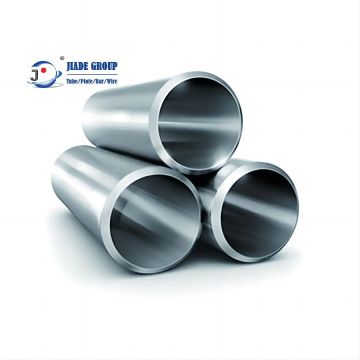
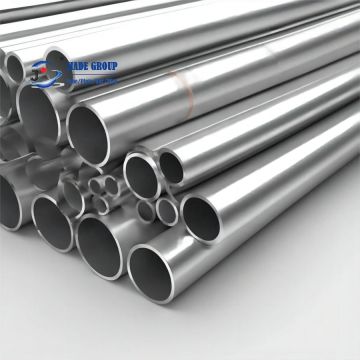
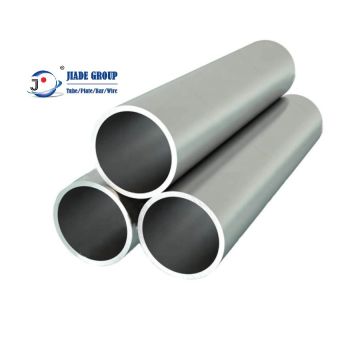
Depending on the percentage of chromium present, stainless steel is categorized into different grades -304, 304L, 304H,316 and so on. The addition of chromium as well as other elements (such as molybdenum, copper, nickel, phosphorus, titanium, etc.) changes the properties of stainless steel.Our company can advise you on the best material for your application, whether it is a Stainless Steel Pipe or a stainless steel sheet form. We have been in the Stainless Steel Material industry for 20 years and believe we can give you the best solution.

304 stainless steel is an austenitic steel that contains 16 to 24 percent chromium and up to 35 percent nickel.The most common type of 304 stainless steel is 18/8 or 18-8 steel, which consists of 18 percent chromium and 8 percent nickel. In addition, it contains about 2% manganese,0.1% nitrogen,0.03% sulfur,0.08% carbon,0.75% silicon, and 0.045% phosphorus.304 stainless steel is the most popular and widely used type of steel.
By looking at the properties of 304 stainless steel, it is clear to see why it is used in so many applications. It is a versatile steel with many advantages that make it a popular choice for designers and manufacturers. It is used in a wide range of engineering applications.
304 stainless steel is non-magnetic and has high resistance to corrosion and oxidation from atmospheric, chemical, petroleum, textile and food industry sources.
It has good stretchability - the combination of low yield strength and high elongation allows machining into complex shapes. (Adequate annealing measures should be taken immediately after forming.)
This austenitic steel is easy to weld. (During welding, chromium carbide may form, which may weaken its corrosion resistance. To overcome this, complete annealing after welding is required to dissolve chromium carbide. In addition, the austenitic organization tends to crack during welding - this is overcome by adding a small amount of ferrite during re-solidification).
It has high strength and toughness even at very low temperatures (cryogenic).
It has a smooth surface that is easy to clean.
Its polished surface gives it a good luster and appearance.
It can withstand multiple washes using detergents and household chemical cleaners.
Physical/Mechanical/Electrical/Thermal Properties
Vickers hardness = 129
Melting point = 1400 -1455 degrees Celsius
Modulus of elasticity = 193 -200 GPa
Tensile strength = 505 MPa
Poisson's ratio = 0.29
Density = 8 g/cc
Magnetic permeability = 1.008
Resistivity = 7.2 e-005 ohm-cm
Types of 304 Stainless Steel
There are two sub-categories of 304 stainless steel - Grade 304L and Grade 304H. Grade 304L has a lower carbon content and does not require annealing after welding, so it can be used for large parts. 304H has a higher carbon content and can be used in applications requiring high temperatures.
Applications and Uses
 304 stainless steel is everywhere. It is used in a variety of products in many different fields. Here are some examples of some common uses:
Chemical industry - large tanks and vessels for liquids and solids
Food industry - food processing equipment such as milking machines, storage tanks, transportation tanks, pipes, valves, milk carts, etc. Also used in breweries, distilleries and juice industries.
Household Uses- 304 stainless steel is resistant to the corrosive effects of acids found in fruits, milk, meat and vegetables and is quite wear resistant. Hence, it is widely used in sinks, table tops, stoves, refrigerators, cutlery, utensils and various other appliances.
Architectural applications-Paneling, decorative strips, railings, trim.
Industrial applications-tools, bolts, nuts, screws, etc.
Automotive and Aerospace Industry - Fuel tanks, various structural components.
Hospitals - surgical equipment.
Commercial - sanitary fittings, piping.
The file is encrypted. Please fill in the following information to continue accessing it
Related Products List
Contact Us


Privacy statement: Your privacy is very important to Us. Our company promises not to disclose your personal information to any external company with out your explicit permission.
Fill in more information so that we can get in touch with you faster
Privacy statement: Your privacy is very important to Us. Our company promises not to disclose your personal information to any external company with out your explicit permission.