




Send Message
Privacy statement: Your privacy is very important to Us. Our company promises not to disclose your personal information to any external company with out your explicit permission.

Blog Overview: This in‑depth industrial blog unveils the core performance secrets, manufacturing advantages, industrial standards, and engineering application values of High Strength ASTM B637 Alloy Steel Wire (UNS N07718 / W.Nr 2.4668 Inconel 718). Tailored for global chemical, military, oil & gas, aerospace, and OEM manufacturing buyers, it covers material composition, mechanical properties, industry innovations, procurement guidelines, and maintenance tips, helping B2B purchasing managers select reliable superalloy wire for extreme industrial environments.
High Strength ASTM B637 Alloy Steel Wire is a premium precipitation‑hardening nickel‑based superalloy wire widely recognized in global high‑end industrial manufacturing. Correspondingly graded to UNS N07718 (Inconel 718) and European standard W.Nr 2.4668, this professional alloy wire is exclusively manufactured by JIADE Group with strict vacuum melting and precision cold‑drawing production processes.
Different from ordinary Stainless Steel, brass, and beryllium Copper Wire , this superalloy wire features ultra‑high tensile strength, extreme temperature stability, and superior sulfur & corrosion resistance. It supports diversified customized profiles including round, flat, square, and special‑shaped cross‑sections, and is supplied in three mature states: solution‑treated, cold‑drawn, and age‑hardened. As a professional manufacturer of Alloy Steel Material, JIADE Group strictly follows ASTM B637 chemical composition systems and AMS aerospace‑grade wire standards for full‑process production.
High Strength ASTM B637 Alloy Steel Wire adopts a scientific nickel‑chromium‑niobium‑molybdenum alloy formula, which is the core reason for its extreme environmental adaptability. The precise chemical ratio enables the material to form stable precipitation‑hardening phases after professional heat treatment, fundamentally improving structural strength and environmental resistance.
This alloy formula fully complies with international ASTM B637 standard specifications and matches AMS aerospace industrial standards. It effectively resists chloride ion pitting, crevice corrosion, and hydrogen sulfide stress cracking, fully meeting NACE MR0175 anti‑acid environment requirements for oil and gas fields. Compared with conventional Special Steel Material, its chemical stability remains unchanged in ultra‑low temperature, high‑temperature, and strong corrosive industrial scenarios.
JIADE Group adopts top‑tier industrial manufacturing technology to produce High Strength ASTM B637 Alloy Steel Wire, ensuring batch stability and ultra‑high precision of finished products. The whole process includes vacuum smelting purification, ingot forging, multi‑pass precision cold drawing, fixed‑size cutting, solution heat treatment, and aging hardening treatment.
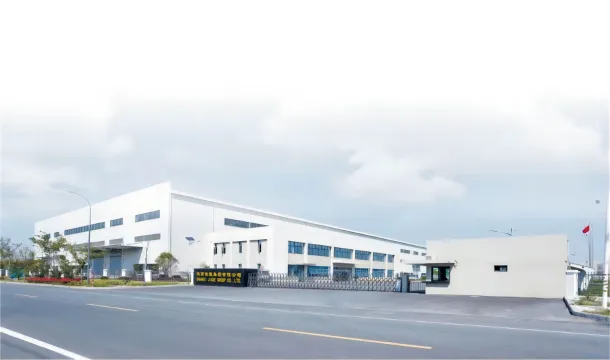
Supported by the group’s 200,000㎡ modern factory and advanced intelligent production lines, JIADE Group achieves an annual output of 600,000 tons of metal materials, providing stable large‑batch supply and small‑batch sample customization services for global industrial buyers.
The biggest secret of High Strength ASTM B637 Alloy Steel Wire dominating high‑end industrial markets lies in its excellent comprehensive mechanical properties. After professional aging hardening treatment, its tensile strength reaches 1380–1550 MPa, far exceeding ordinary alloy and stainless steel wires.
Relying on extreme strength and corrosion resistance, High Strength ASTM B637 Alloy Steel Wire is widely applied in core fields with harsh working conditions, cooperating with Steel Pipe Fitting and other metal accessories to form complete industrial supporting systems:
Most conventional building and industrial wires (stainless steel, brass, beryllium copper) are limited by material formulas and cannot adapt to extreme industrial environments. High Strength ASTM B637 Alloy Steel Wire breaks through these limitations with exclusive superalloy characteristics:
The mainstream international standards governing this product include ASTM B637‑18, ASME SB637, AMS 5662 aerospace standards, and NACE MR0175 oilfield anti‑corrosion specifications. All High Strength ASTM B637 Alloy Steel Wire supplied by JIADE Group fully complies with the above standards and supports full standard traceability.
Our factory provides complete original MTC material certificates, SGS third‑party test reports, and official ISO9001, TUV, CE certification documents to meet strict acceptance standards of European and American high‑end engineering projects.
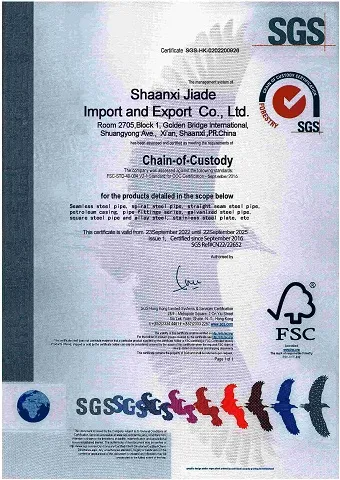

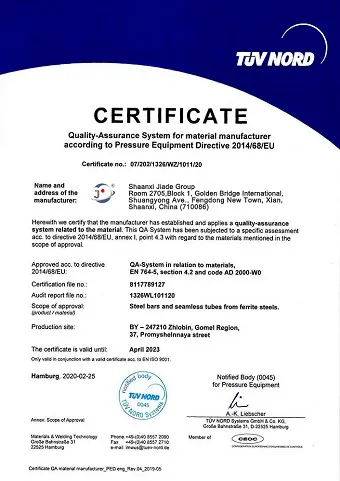
Global chemical, military, oil & gas manufacturers and OEM purchasers focus on practical engineering reliability and standardized compliance when sourcing High Strength ASTM B637 Alloy Steel Wire. The five core procurement concerns cover the core screening criteria of international buyers. First, full international standard compliance, requiring products to strictly implement ASTM B637 and UNS N07718 specifications with complete traceable certification documents to avoid project non‑compliance risks. Second, batch performance stability, ensuring consistent tensile strength, corrosion resistance and temperature resistance of bulk products to prevent equipment failure. Third, customized service capability, including special‑shaped profiles, precision tolerance, multi‑hardness state customization and fixed‑length cutting. Fourth, factory production capacity and delivery stability, supporting small‑batch sample testing and large‑batch bulk order delivery. Fifth, after‑sales technical support and third‑party testing authorization, solving on‑site engineering inspection and application problems. JIADE Group fully covers all buyer demands with standardized production and complete service system.
The global superalloy wire industry is currently accelerating technological iteration centered on high precision and extreme environment adaptability. Traditional secondary processing technology is gradually replaced by integrated vacuum smelting and one‑time aging molding technology, which effectively reduces material impurity content and improves batch product consistency. More manufacturers begin to optimize nickel‑chromium alloy ratio to enhance low‑temperature toughness and high‑temperature oxidation resistance of ASTM B637 alloy wire. In terms of application expansion, this alloy wire is no longer limited to aerospace and oil and gas fields, and is widely promoted in high‑end precision manufacturing, nuclear power auxiliary equipment, and marine extreme engineering. Meanwhile, intelligent performance monitoring technology is combined with superalloy components to realize real‑time stress and corrosion monitoring, greatly improving the safety and intelligence level of modern industrial equipment.
As a leading export manufacturer, JIADE Group continues to increase R&D investment in High Strength ASTM B637 Alloy Steel Wire processing and material optimization. The professional R&D team optimizes the proportion of niobium, molybdenum and titanium elements in the alloy formula, further improving the material’s anti‑creep performance and low‑temperature brittleness resistance, making it adaptable to alpine regions and ultra‑high temperature industrial scenarios. In production technology, the group introduces intelligent precision cold‑drawing equipment to achieve micron‑level dimensional tolerance control, increasing the yield of special‑shaped superalloy wires by 15%. The independently optimized composite heat treatment process realizes the integration of soft‑state processing and hard‑state service, solving the industry pain point of difficult processing of high‑strength superalloy wires. At present, the upgraded ASTM B637 alloy wire has been successfully applied in offshore corrosion‑resistant equipment, high‑temperature gas turbine components and military precision instruments, obtaining consistent recognition from global industrial purchasers.
The high‑strength nickel‑based superalloy wire industry presents three major development trends. First, customized high‑precision differentiation: With the diversification of extreme industrial scenarios, standardized ordinary products are gradually eliminated, and personalized customized products for special environments become mainstream. Second, long‑life green industrialization: High‑durability superalloy materials replace short‑life ordinary metal wires, reducing equipment replacement frequency and industrial comprehensive costs, conforming to global green manufacturing trends. Third, cross‑industry integrated penetration: ASTM B637 alloy wire continues to expand from traditional aerospace and oil and gas fields to new energy, nuclear power, marine engineering and high‑end precision manufacturing fields, with continuous market demand growth. In addition, international industry supervision is becoming increasingly standardized, and complete certification systems and stable batch quality have become core competitive thresholds for export manufacturers.
Founded in 2005, Shaanxi Jiade Import And Export Co., Ltd (JIADE Group) is a professional global supplier of high‑end industrial metal materials. The group owns a 200,000 square meters modern intelligent factory, with fixed assets of 120 million USD, more than 400 professional employees, and an annual output capacity of 600,000 tons. It is equipped with complete vacuum smelting, precision cold drawing and intelligent heat treatment production lines, realizing independent R&D, production and export of superalloy wires.
The group has a professional superalloy R&D team, focusing on material formula optimization and processing technology innovation, with multiple independent processing patents. In addition to High Strength ASTM B637 Alloy Steel Wire, we supply full‑series industrial metal materials including Titanium Material and Copper Material. All products pass ISO9001, CE, SGS, TUV international authoritative certifications, supporting third‑party testing and global high‑end project acceptance.
A: It is a precipitation‑hardening nickel‑based superalloy, featuring 1380–1550 MPa ultra‑high strength, 650℃ high‑temperature resistance, and hydrogen sulfide corrosion resistance. Its comprehensive performance is far better than stainless steel, brass and copper wires, suitable for extreme industrial working conditions.
A: We support 0.1–12mm diameter precision customization, round/flat/square/special‑shaped profiles, soft/hard/age‑hardened three states, coiled/straight bar forms and fixed‑length cutting, covering small sample orders and large bulk orders.
A: Yes. We provide original MTC material certificates, SGS test reports, ISO9001, TUV, CE certification documents, fully meeting international engineering third‑party testing and acceptance standards.
A: It meets NACE MR0175 acidic environment standards, resists hydrogen sulfide stress cracking and chloride corrosion, and maintains stable performance in high‑temperature downhole working conditions, solving the failure problem of ordinary wires in oilfield extreme environments.
A: With excellent creep resistance and fatigue resistance, its service life is 3–5 times that of ordinary metal wires, greatly reducing equipment maintenance and replacement costs for industrial manufacturers.
High-Click SEO Title: Unraveling the Secrets of High Strength ASTM B637 Alloy Steel Wire
Article Outline:
Summary: This blog systematically reveals the core performance secrets, production advantages, industrial standards, and engineering values of High Strength ASTM B637 Alloy Steel Wire (UNS N07718 Inconel 718). It analyzes B2B buyers’ procurement demands, industry latest technologies and trends, and provides professional usage and maintenance solutions. Combined with JIADE Group’s factory strength, certification advantages and R&D capabilities, it provides authoritative purchasing reference for global chemical, military, oil & gas, and aerospace industrial manufacturers.

November 10, 2026

November 09, 2026
Unearthing the Unmatched Performance of Alloy Steel Pipes in Diverse Sectors In the realm of industrial materials, alloy steel pipes have carved out a niche for their exceptional performance and...
Nconel Material: The Alloy of Choice for Extreme Durability and Thermal Stability Nconel material, a family of nickel-based superalloys, has become synonymous with extreme durability and thermal...
Stainless Steel Flange: The Corrosion-Resistant Connector for Industrial Piping Systems The Maritime and Offshore Industry's Preferred Choice In the maritime and offshore industries, where saltwater...
Email to this supplier
November 10, 2026
November 09, 2026
Related Products List
Contact Us

Privacy statement: Your privacy is very important to Us. Our company promises not to disclose your personal information to any external company with out your explicit permission.
Fill in more information so that we can get in touch with you faster
Privacy statement: Your privacy is very important to Us. Our company promises not to disclose your personal information to any external company with out your explicit permission.